`
Dental Implants
Dental implants are a long-lasting tooth replacement option designed to restore the appearance and function of missing teeth. At Precision Dentistry, Dr. Eskandar helps patients explore whether dental implants may be an appropriate solution for rebuilding their smiles. Implants can replace a single missing tooth, support a dental bridge, or help stabilize a denture, depending on your needs.
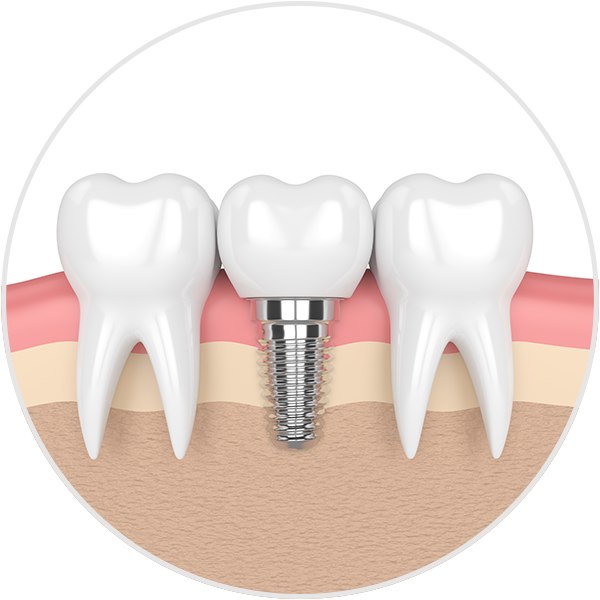
A dental implant is a small post, typically made of titanium, that is surgically placed in the jawbone to serve as an artificial tooth root. As the implant heals, it can bond with the surrounding bone to create a stable foundation for a replacement tooth. Dental implants can help restore chewing ability, improve smile aesthetics, and support jawbone health by providing stimulation where a natural tooth root is missing.
Replacing missing teeth can make everyday activities like eating, speaking, and smiling more comfortable. With an individualized treatment plan, dental implants may help you regain confidence in your smile while maintaining a natural-looking appearance.
Are You a Candidate for Dental Implants?
Dental implants may be an option if you have lost one or more teeth and want a stable replacement that looks and functions like natural teeth. The best treatment approach depends on your oral health, jawbone condition, medical history, and goals for restoring your smile.
Your evaluation begins with a dental/radiographic examination and a review of your health history. These steps help determine whether dental implant placement is appropriate and whether additional treatment, such as bone grafting, may be needed before surgery.
During your consultation, Dr. Eskandar or an oral and maxillofacial surgeon referred by our practice can discuss your specific needs, answer your questions, and explain potential treatment options. Our team works closely with you and your restorative dentist to coordinate care and help you understand what to expect throughout the dental implant process.
Advances in Dental Implant Surgery
Advances in dental implant techniques allow treatment to be tailored to each patient’s anatomy and restorative needs. In appropriate cases, Dr. Eskandar may place a single-stage dental implant, which does not require a separate surgical procedure to uncover the implant after healing. The timing of restoration depends on the implant’s stability, healing progress, and individual treatment plan.
In some cases, a dental implant can be placed during the same appointment as a tooth extraction. This approach may reduce the number of surgical visits, although it is not suitable for every patient. Factors such as infection, bone quality, and the condition of the extraction site help determine the most appropriate timing.
Dental implant placement is often a collaborative process involving an implant surgeon and a restorative dentist. Dr. Eskandar performs implant surgery and may also perform necessary tooth extractions and bone grafting. Your restorative dentist plans and provides the final crown, bridge, or denture and coordinates any temporary replacement teeth needed during healing.
What to Expect During the Dental Implant Procedure
Dental implant treatment typically involves several stages, from the initial evaluation to placement of the final replacement teeth. Your treatment plan will depend on how many teeth are missing, the condition of your jawbone, and whether additional procedures are necessary.
1. Treatment Planning and Preparation
Before surgery, your dental and medical history will be reviewed, and diagnostic imaging will help assess your jawbone and the planned implant site. Your care team will determine whether you need a tooth extraction, bone grafting, or other preparatory treatment. They will also coordinate with your restorative dentist to plan the final replacement tooth or teeth.
2. Dental Implant Placement
During implant surgery, the implant post is placed into the jawbone at the planned location. The site is then managed to support healing. Depending on your treatment plan, the implant may be covered by the gums during healing or fitted with a component that remains accessible above the gumline.
Following surgery, your care team will provide instructions for oral hygiene, eating, and recovery. A temporary denture or other temporary restoration may be an option while the implant heals, depending on your clinical needs.
3. Healing and Bone Integration
Over the following weeks or months, the implant can integrate with the surrounding jawbone through a process called osseointegration. This healing period helps establish the stability needed to support a replacement tooth. The time required varies based on factors such as bone quality, implant stability, overall health, and whether bone grafting was performed.
During this stage, follow-up appointments allow your care team to monitor healing and determine when the implant is ready for restoration. Your dentist may recommend temporary teeth and dietary adjustments while the site heals.
4. Placement of Your Replacement Teeth
Once the implant has healed sufficiently, your restorative dentist can proceed with the final restoration. Impressions or digital scans may be used to create a custom dental crown, bridge, or denture. Depending on the type of restoration, an attachment or abutment connects the replacement teeth to the implant.
The goal is to create a restoration that fits comfortably, functions properly, and complements your natural smile. Your dentist will check the fit and bite and explain how to care for your new teeth.
How Long Does Dental Implant Treatment Take?
The overall dental implant timeline varies from patient to patient. Some cases may be completed in a few months, while others require additional healing time or preparatory procedures such as bone grafting. Immediate or early placement of a temporary tooth may be possible in selected cases, but it does not always mean the final restoration can be placed right away.
Your care team will explain the expected timeline based on your treatment plan and healing progress. Although implant treatment involves multiple stages, appointments are planned to help you move through the process as comfortably and efficiently as possible.
Caring for Your Dental Implants
Dental implants require ongoing care, just like natural teeth. Brush twice daily, clean between your teeth and around your implant restorations, and attend recommended dental checkups and professional cleanings. Your dentist may recommend specific cleaning tools depending on whether you have an implant crown, bridge, or implant-supported denture.
Good oral hygiene and routine professional care help protect the gums and supporting bone around your implants. Contact your dental team if you notice persistent discomfort, swelling, bleeding, or changes in how your implant restoration fits or feels.
Explore Dental Implants at Precision Dentistry
If you are missing teeth and want to learn more about replacing them, a dental implant consultation can help you understand your options. Dr. Eskandar and our team can evaluate your oral health, discuss your goals, and coordinate with your restorative dentist to determine the next steps.
Contact Precision Dentistry to schedule an evaluation and learn whether dental implants may be right for you.